The Hidden Danger of Good
Intentions in Reentry
Newfound freedom for formerly incarcerated men can feel like that proverbial “kid in the candy store,” especially when they begin to see the fruit of diligent saving and budgeting. While we take time to celebrate and encourage these accomplishments, we also continue to exhort them to remain disciplined—saving and preparing for their eventual exit from the program.
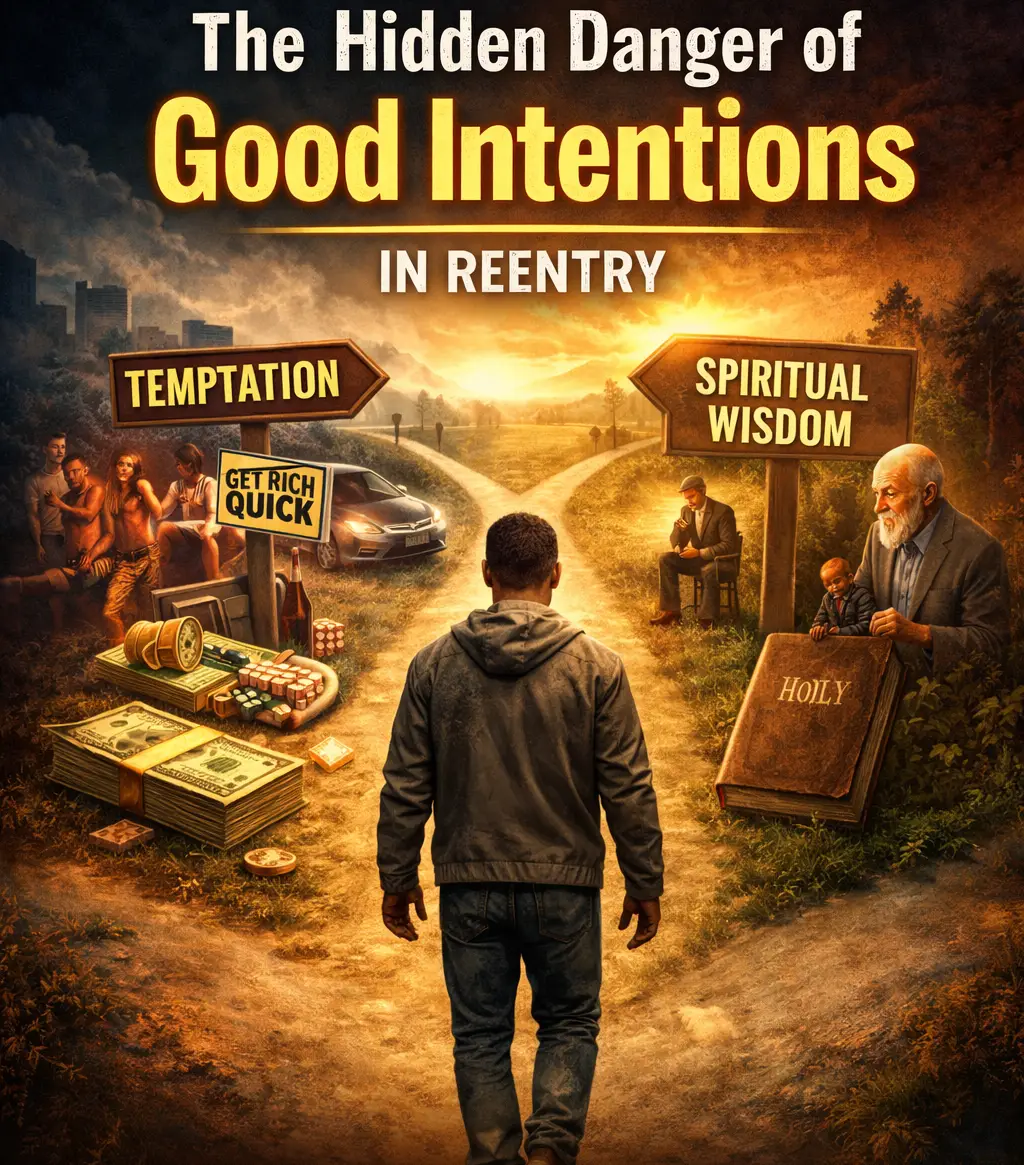
The flesh, however, has desires opposed to the Spirit, and there is a strong pull to satisfy those impulses. We all face these temptations, but for men who have been denied the opportunity to work and earn a living—sometimes for decades—the pull can be especially intense.
Much of this desire is rooted in a longing to provide for their families after years of absence. Yet there is an often-unseen danger in that zeal. In their eagerness to provide, they can forget what the Lord calls us to. Scripture gives clear instruction in the opening chapter of Proverbs:
“To learn wisdom and moral instruction,
to discern wise counsel;
to receive moral instruction in skillful living,
with righteousness, justice, and equity;
to impart shrewdness to the morally naive,
a discerning plan to the young person.” (Proverbs 1:2–4)
I love that God’s holy Word contains everything needed for life, yet we often fail to give it proper priority—indeed, we fail to see it as essential for life. The NET translation’s rendering of the Hebrew word ormah (“shrewdness”) in verse 4 is helpful. The word can carry either a negative or positive meaning depending on context. The serpent’s “shrewdness,” for example, is used to deceive; but biblical shrewdness, as God intends it, equips a person to live a morally prudent, wise, and godly life.
And there lies the tension. In their haste to provide, some men justify their own “shrewd” plans without first committing those plans to prayer, submitting them before the Lord, or seeking the counsel of godly men. Yet these very practices create space for God to guide and direct them toward a plan that honors Him. Scripture is full of examples of people who rushed ahead with their own agenda without consulting the Lord—and it never turned out as they expected. As Proverbs 16:9 reminds us, “A person plans his course, but the Lord directs his steps.”
Paul addresses this same internal struggle in Galatians:
“Do not be deceived. God will not be made a fool. For a person will reap what he sows. Because the one who sows to his own flesh will reap corruption from the flesh, but the one who sows to the Spirit will reap eternal life from the Spirit.” (Galatians 6:7–8)
The best course of action, then, is to humbly submit out of fear of the Lord. This posture marks the beginning of wisdom and leads to a morally prudent life—one that fulfills our responsibilities in a God-honoring way.
Yes, the lure of the flesh is strong. But the power to sow to the Spirit is far stronger if we choose it. Our choices reveal where our reliance, devotion, and allegiance truly lie. Ultimately, each man must answer the question: Am I trusting in my own strength, or in God—who possesses all power, all wisdom, and all knowledge?
Call to Action:
Choose today to sow to the Spirit.
Choose to pause before acting.
Choose to pray before planning.
Choose to seek counsel before deciding.
Choose to trust God more than your impulses, your fears, or your desire to prove yourself.
Make it your daily practice to bring every plan—big or small—before the Lord. Invite Him to direct your steps. Surround yourself with godly men who will speak truth, wisdom, and accountability into your life. And commit yourself to walking in the Spirit, one obedient choice at a time.
Freedom is a gift, but Spirit-led freedom is a calling. Step into that calling with humility, courage, and dependence on the God who has already begun a good work in you—and who will be faithful to complete it.